
How Lighting Affects Mood, Sleep, and Productivity
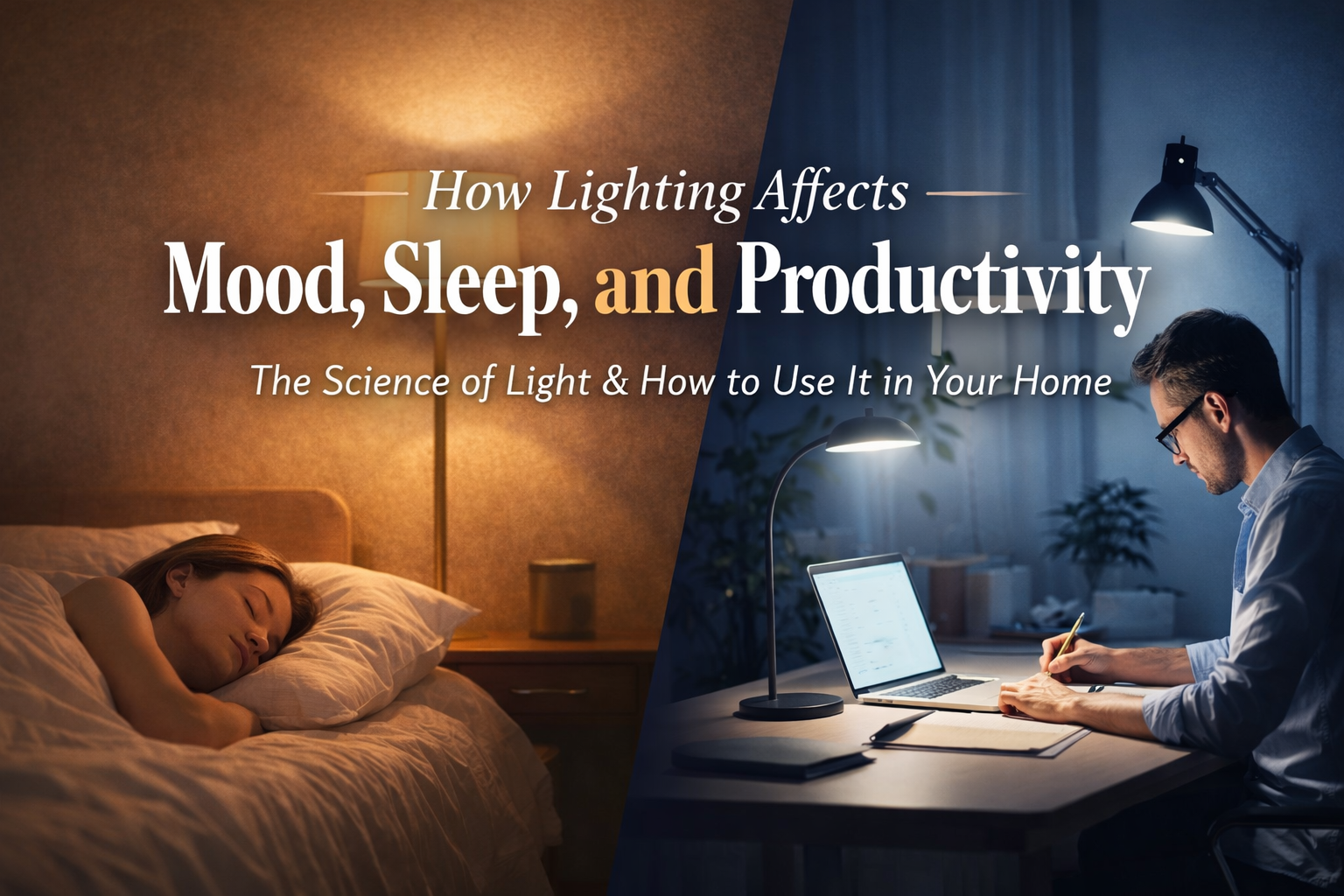
The Science of Light and How to Use It in Your Home
Lighting is more than decoration.
The light you live under every day quietly shapes how you feel, how well you sleep, and how focused you are at work. Poor lighting can leave you feeling tired, stressed, or restless. The right lighting can improve mood, support healthy sleep, and boost productivity—without changing anything else in your routine.
In this guide, we’ll explain how lighting affects the brain and body, how different color temperatures influence mood and sleep, and how to design your home lighting for better well-being using simple, practical choices.
Why Lighting Has Such a Powerful Effect on the Human Body
Light directly affects your circadian rhythm—your internal 24-hour clock that controls:
-
Sleep and wake cycles
-
Hormone production (melatonin, cortisol)
-
Energy levels
-
Mood and emotional balance
Your brain uses light cues to decide when to be alert and when to rest. Artificial lighting, especially at night, can either support this system—or disrupt it.
That’s why lighting design is no longer just about aesthetics. It’s about health.
The Relationship Between Lighting and Mood
How Light Influences Emotions
Lighting affects mood through two main mechanisms:
-
Brightness (intensity)
-
Color temperature (warm vs cool light)
Bright, cool light stimulates alertness and mental activity. Dim, warm light signals safety, relaxation, and comfort.
This is why:
-
Bright offices feel energizing
-
Warm living rooms feel calming
-
Harsh lighting can cause stress or fatigue
Warm Light and Emotional Comfort
Warm light (2700K–3000K) is associated with:
-
Relaxation
-
Emotional warmth
-
Reduced stress
-
A sense of comfort and intimacy
This type of light mimics sunset and firelight, which the human brain associates with rest and safety.
Best uses:
-
Living rooms
-
Bedrooms
-
Dining areas
-
Evening relaxation spaces
Warm lighting helps create a calm emotional environment after a long day.
Cool Light and Mental Stimulation
Cool light (4000K–6000K) promotes:
-
Alertness
-
Focus
-
Mental clarity
-
Faster reaction times
It resembles daylight, which signals the brain to stay awake and active.
Best uses:
-
Home offices
-
Kitchens
-
Workspaces
-
Morning routines
However, too much cool light—especially at night—can increase stress and restlessness.
How Lighting Affects Sleep Quality
Sleep is where lighting has the biggest long-term impact.
The Role of Melatonin
Melatonin is the hormone that tells your body it’s time to sleep. Darkness increases melatonin production. Bright and blue-rich light suppresses it.
This means:
-
Bright, cool light at night → harder to fall asleep
-
Warm, dim light → easier sleep onset
Many people struggle with sleep not because of stress—but because of poor evening lighting.

Why Blue Light Is a Problem at Night
Cool light (especially above 5000K) contains more blue wavelengths. These wavelengths strongly suppress melatonin.
Common blue-light sources:
-
Overhead LED lights
-
Desk lamps with cool bulbs
-
Screens combined with bright room lighting
This can lead to:
-
Difficulty falling asleep
-
Shallow sleep
-
Nighttime awakenings
-
Feeling tired even after 8 hours in bed
Best Lighting for Better Sleep
To support healthy sleep:
-
Use warm light only (2700K–3000K) after sunset
-
Avoid bright overhead lights in the evening
-
Choose floor lamps or table lamps for indirect light
-
Keep bedroom lighting dim and soft
Lighting should gradually transition from bright during the day to warm and low at night.
Lighting and Productivity: Getting More Done With Less Effort
Lighting doesn’t just affect sleep—it shapes how efficiently you work.
Why Poor Lighting Hurts Productivity
Bad lighting can cause:
-
Eye strain
-
Headaches
-
Fatigue
-
Reduced concentration
Too dim = drowsy
Too bright = overstimulated
The goal is balanced, task-appropriate lighting.
Best Lighting for Focus and Work
For productivity:
-
Use neutral to cool light (4000K–5000K)
-
Ensure even light distribution
-
Avoid glare and harsh shadows
-
Use task lighting instead of relying only on ceiling lights
Floor lamps with directional heads or adjustable height are especially effective for home offices.
Lighting for Different Times of the Day
Morning
-
Brighter, cooler light
-
Helps wake the brain
Afternoon
-
Balanced neutral light
-
Prevents energy dips
Evening
-
Transition to warmer tones
-
Signals the brain to slow down
This natural light rhythm improves both productivity and sleep quality.
How to Design Lighting for Mood, Sleep, and Productivity at Home
Layered Lighting Is the Secret
The best homes don’t rely on one light source.
They use three layers of lighting:
-
Ambient lighting (overall light)
-
Task lighting (focused light)
-
Accent lighting (atmosphere)
Floor lamps are especially powerful because they can serve all three roles depending on design and bulb choice.

Living Room Lighting for Emotional Balance
Recommended setup:
-
Warm floor lamp near sofa (3000K)
-
Indirect lighting instead of harsh overhead lights
-
Soft, diffused light sources
This creates a space that feels calm but not sleepy.
Bedroom Lighting for Better Sleep
Recommended setup:
-
Warm bedside lamps or floor lamps
-
No exposed bright bulbs
-
Avoid ceiling lights at night
Lighting should feel gentle and non-stimulating.
Home Office Lighting for Productivity
Recommended setup:
-
Adjustable floor lamp with neutral/cool light
-
Task-focused light near desk
-
Balanced ambient light to reduce eye strain
Avoid working under dim or yellow light—it reduces alertness.

✨ Upgrade Your Lighting, Upgrade Your Well-Being
The right lighting setup can improve how you feel every day—without changing your routine.
✔ Warm and adjustable LED options
✔ Eye-caring designs for work and reading
✔ Modern styles that fit real homes
👉 [Shop Floor Lamps Designed for Comfort & Focus]
Choosing the Right Light Color Temperature (Quick Guide)
-
2700K–3000K: Relaxation, evenings, bedrooms
-
3500K–4000K: Balanced daily use
-
4000K–5000K: Focus, work, productivity
-
5000K–6000K: Short-term tasks, daytime use only
Adjustable color-temperature lamps give you the most flexibility.
Why Adjustable Lighting Is the Best Long-Term Choice
Life changes throughout the day. Your lighting should too.
Adjustable lamps allow you to:
-
Work during the day
-
Relax at night
-
Avoid buying multiple lamps
-
Protect sleep quality
This is especially useful for apartments and multifunctional spaces.
Product Mapping Section (Internal Linking)
For Relaxation & Mood
Product page mapping:
➡ Warm LED Floor Lamps (2700K–3000K)
Best for:
-
Living rooms
-
Bedrooms
-
Evening use
For Sleep-Friendly Bedrooms
Product page mapping:
➡ Soft Light Floor Lamps with Fabric Shades
Best for:
-
Reducing glare
-
Creating calm nighttime environments
For Productivity & Home Offices
Product page mapping:
➡ Adjustable Floor Lamps with Neutral/Cool Light
Best for:
-
Workspaces
-
Reading
-
Long focus sessions

Light Your Home the Way Your Body Needs
Lighting shouldn’t fight your natural rhythm—it should support it.
Discover floor lamps designed to improve comfort, focus, and sleep.
🟢 Adjustable color temperatures
🟢 Modern minimalist designs
🟢 30-day hassle-free returns
👉 [Browse Our Best-Selling Floor Lamps]
Final Thoughts: Light Is a Daily Habit, Not a Decoration
You experience lighting every day, for hours at a time. Its impact compounds.
When your lighting supports your mood, protects your sleep, and boosts productivity, everything feels easier—without effort.
Start with small changes. Choose the right light.
Your body will notice the difference.
POST COMMENTS